
Science-Backed Tips to Land Feeling Vibrant, Calm, and Glowing
Summer is here, and that means flights, road trips, beach days, and adventures ✨. But let’s be honest, travel can wreck your body if you’re not intentional. Dry cabin air, hours of sitting, immune stressors, time zone shifts, and stress all add up.
The good news? You can stack the deck in your favor. Below are my favorite ways to support your body before, during, and after travel, every single tip backed by peer-reviewed research or randomized clinical trials. No fluff, just real science and real rituals.
Let’s go 💛
1. Compression Socks Are a Must for Long Flights 🧦
If your flight is longer than 4 hours, please pack compression socks. This is the one tip with the strongest science behind it.
A 2021 Cochrane systematic review of 12 randomized controlled trials with 2,918 long-haul travelers found high-certainty evidence that wearing compression stockings dramatically reduced the risk of deep vein thrombosis (DVT). In the pooled data, only 3 out of 1,400 people who wore compression socks developed asymptomatic DVT, compared to 47 out of 1,237 people without them (Clarke et al., Cochrane Database Syst Rev, 2021).
That’s an odds ratio of 0.10, meaning a 90% reduction in risk. The same review also found significantly less leg swelling and edema in the compression group.
Here’s why they work 🧠
When you sit for hours, blood pools in your lower legs. Compression socks apply gentle, graduated pressure (tightest at the ankle, looser going up), which helps push blood back toward your heart. This keeps circulation moving, reduces swelling, and lowers clot risk.
Look for below-knee socks with 15 to 30 mmHg of pressure at the ankle, which is the range studied in the trials.
2. Move Your Body Before AND During the Flight 🚶♀️
Movement is medicine, especially before you’re about to sit still for hours.
Before the flight: A study published in the journal Environment and Behavior (Olafsdottir et al., 2020) randomized 90 participants into walking in nature, viewing nature, or treadmill walking. All three interventions lowered cortisol significantly, but walking outdoors reduced cortisol more than nature viewing alone (p < .05) and improved mood the most. So a pre-flight walk (especially outside) calms your nervous system before you even reach the airport.
During the flight: A study published in the International Angiology journal showed that simple leg exercise regimens significantly enhanced popliteal (behind-the-knee) venous blood flow during prolonged sitting, reinforcing why moving in-flight reduces venous stasis (Hitos et al., 2007).
My in-flight rule of thumb 💡
Every hour, do this:
- Stand up and walk the aisle if you can
- Heel raises (10 to 20 reps, this one had the highest calf muscle activation in EMG studies)
- Ankle circles in both directions
- Knee lifts while seated
Tiny movements, big circulation boost.
3. Immunity Support Is Non-Negotiable 🛡️
Travel is an immunity stress test. Airports, planes, new environments, less sleep, time changes. Your immune system needs backup.
The research on Vitamin C is solid here. A 2013 Cochrane review of 29 trials with over 11,000 people found that while regular vitamin C didn’t reduce colds in the general population, it cut cold incidence in HALF for people under physical stress (like marathon runners, skiers, and soldiers training in cold conditions). Travelers fall into that “physiologically stressed” category. Vitamin C also shortened cold duration by about 9.4% on average (Hemilä & Chalker, Cochrane, 2013).
Zinc is the other heavy hitter. A meta-analysis of 17 randomized controlled trials with 2,121 participants found that zinc supplementation reduced the duration of cold symptoms by an average of 1.65 days when started within 3 days of onset (Science et al., CMAJ, 2012).
My go-to combos 💛
- Immunity from Organifi for daily immune support (vitamin C, zinc, elderberry, mushrooms)
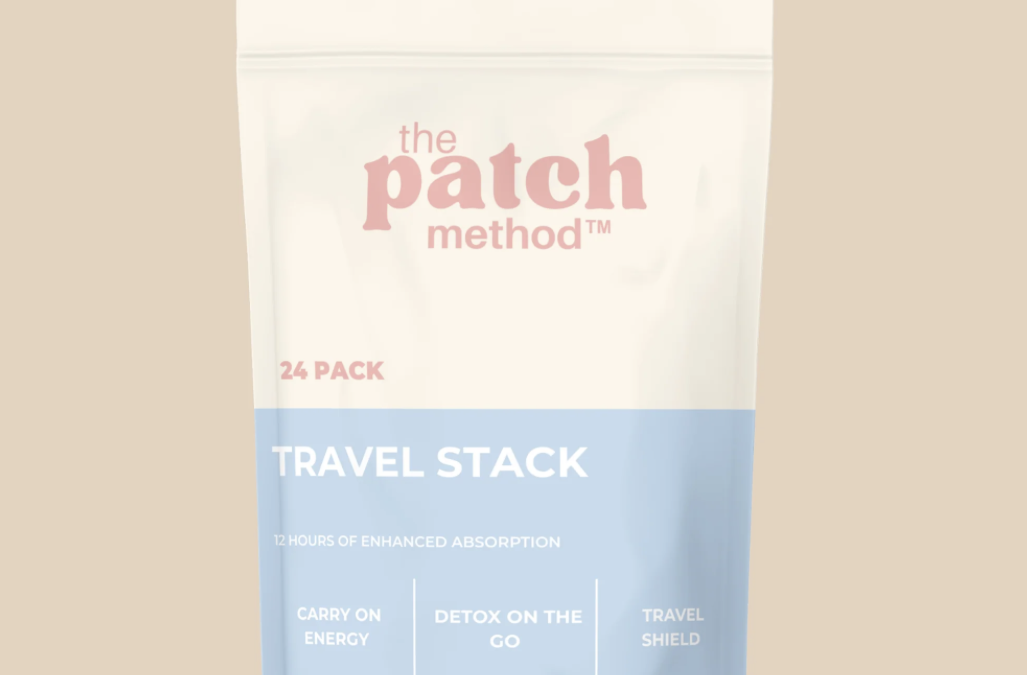
- Immunity Patch from The Patch Method for an easy, no-pill option I can wear during travel days
I start loading these about 3 to 5 days before I fly and continue through the trip.
4. Red Light Therapy: My Travel Secret Weapon 🔴
Red light therapy is one of the most overlooked tools for travel recovery, and the science is getting really exciting.
A randomized controlled trial published in the Journal of Athletic Training studied 20 elite female athletes and found that 14 days of whole-body red light therapy (30 minutes per night at 658 nm) significantly improved sleep quality on the Pittsburgh Sleep Quality Index AND increased serum melatonin levels from 22.2 to 38.8 pg/mL compared to placebo (Zhao et al., 2012).
Why this matters for travel ✨
When you cross time zones or fly through the night, your melatonin rhythm gets scrambled. Unlike blue light (your phone, overhead cabin lights), red light wavelengths (around 600 to 700 nm) do not suppress melatonin production, and research suggests they may actually support natural melatonin levels and circadian rhythm alignment (Hamblin, J Clin Sleep Med, 2018).
Other travel benefits backed by research:
- Reduced inflammation and muscle soreness from sitting for hours
- Supports skin recovery from dry cabin air
- May enhance product absorption (great when you’re using a hydrating mask)
- Low EMF means safe to use in your hotel room each night
I love Lumebox for travel because it’s portable and easy to throw in my carry-on. I use it 10 to 15 minutes before bed at my destination to help my body sync to the new time zone.
5. Nourish Your Nervous System 🌿
Travel stress is REAL. Even excited stress is stress, and it spikes cortisol.
The good news: adaptogens like ashwagandha have serious science. A 2019 randomized, double-blind, placebo-controlled trial published in Medicine found that 240 mg of standardized ashwagandha extract daily for 60 days significantly reduced morning cortisol (p < .001) and anxiety scores compared to placebo (Lopresti et al., 2019). A 2025 meta-analysis of 15 RCTs with 873 participants confirmed ashwagandha significantly reduced both perceived stress and cortisol levels (Akhgarjand et al., 2024).
My favorites for calm:
- Harmony from Organifi (has ashwagandha, plus other adaptogens for hormone and stress balance)
- Cortisol Patch from The Patch Method for an easy daily wear option, especially on travel days
6. Plan Calmness Into Your Trip 🧘♀️
This one is so simple but so powerful.
A randomized controlled trial in Healthcare (Gherardi-Donato et al., 2023) showed that mindfulness practice significantly reduced hair cortisol concentration (a long-term stress biomarker), perceived stress, and anxiety compared to a wait-list control. Another randomized crossover trial found a 30-minute Yoga Nidra meditation significantly reduced cortisol and improved well-being (Moszeik et al., Stress and Health, 2025).
My pre-flight rituals 💫
- Go for a walk the morning of (cortisol-lowering + mood-boosting)
- Meditate for 10 to 20 minutes before leaving (even just guided breathing)
- Arrive at the airport EARLY, like extra early. Rushing skyrockets your stress hormones. Give yourself buffer time so you can sit, breathe, sip water, and ease into the journey
- Pack the night before so morning-of feels spacious
- Build in calm. Plan one peaceful thing on day one (a slow breakfast, a walk, time without your phone)
Travel is supposed to feel good. Don’t let logistics steal your peace.
7. Prioritize Sleep, Before AND During Travel 😴
Sleep before a trip matters more than sleep during. Pre-flight sleep deprivation amplifies jet lag, immune suppression, and inflammation.
Magnesium is one of the most researched sleep supports out there. A 2025 randomized, double-blind, placebo-controlled trial of 155 adults with poor sleep showed that magnesium bisglycinate (250 mg elemental) significantly reduced insomnia severity scores compared to placebo (Schuster et al., Nature and Science of Sleep, 2025). A systematic review confirmed magnesium supplementation improves sleep quality and reduces anxiety across multiple RCTs.
My favorites:
- Magnesium Breakthrough from Bioptimizers because it has all 8 forms of magnesium your body needs (glycinate, threonate, malate, citrate, taurate, orotate, sucrosomial, chelate). Available in powder or capsules
- Sleep supplements from Bioptimizers I use these nights before AND during travel. Available in powder and capsules and they are both non-melatonin.
- Sleep supplements from Momentous I use these the nights before AND during travel
Bonus tip: eat real, whole foods the day before and during travel. Skip the airport processed snacks. Bring almonds, fruit, hard-boiled eggs, dark chocolate, or a quality protein bar. Real fuel = real rest.
8. Hydrate Like You Mean It 💧
This is huge. Airplane cabins are pressurized to the equivalent of 6,000 to 8,000 feet of altitude, with humidity levels often below 20% (drier than most deserts). Your body loses water through breathing AND skin at a much faster rate (Cottrell, Aviat Space Environ Med, 1988).
Plain water isn’t enough. You need electrolytes (sodium, potassium, magnesium) to actually retain and absorb that water. Without them, you’ll just pee everything out and land puffy, foggy, and depleted.
My hydration protocol ✨
- 16 to 24 oz water with electrolytes the morning of your flight
- Bring an empty water bottle through security, fill it after
- Drink 8 oz of water every hour in flight (with electrolytes added)
- Skip the alcohol and limit caffeine, both are diuretics and compound dehydration
- Add electrolytes to your water for the first 48 hours at your destination too
9. Support Your Body’s Daily Reset 🌙
I love a daily reset ritual. One of mine is wearing the Detox Patch from The Patch Method at night. I just place it under my right rib cage (right over the liver area) before bed, patch it, and forget it.
A note here for transparency: transdermal detox patches don’t have published clinical trials proving they pull toxins out. I use it as part of my evening wind-down ritual. Your real detox heroes are your liver, kidneys, sweat, breath, and poop, so make sure to:
- Drink LOTS of water (with electrolytes ✨)
- Eat fiber-rich foods (greens, berries, chia seeds)
- Sweat daily if you can (sauna, walk, movement)
- Get good sleep so your glymphatic system can clear your brain
- Eat cruciferous veggies like broccoli, kale, and arugula to support liver phase 2 detox pathways
10. Support Your Gut Before, During, and After Travel 🦠
This section deserves more attention than it usually gets. Travel WRECKS your gut. New foods, time zone shifts, dehydration, stress hormones, antibiotics in restaurant meats, airport food, you name it. Your microbiome takes a real hit.
The science here is solid 💪
A 2018 meta-analysis published in Epidemiology and Health of 11 randomized, double-blind, placebo-controlled trials found that probiotics significantly reduced the risk of traveler’s diarrhea, with a summary relative risk of 0.85 (95% CI 0.79 to 0.91), no heterogeneity, and no publication bias (Bae, 2018). An earlier meta-analysis by McFarland (2007) also showed significant benefit, especially for Saccharomyces boulardii and Lactobacillus strains.
A 2007 Lancet meta-analysis of 34 placebo-controlled trials confirmed that probiotics reduced acute diarrhea risk by 34% (95% CI 8 to 53%) (Sazawal et al., Lancet Infect Dis, 2006).
My non-negotiables for travel gut support 💛
🦠 P3-OM from Bioptimizers This is a patented Lactobacillus plantarum probiotic, and L. plantarum is one of the most studied strains in the world. It survives stomach acid, supports the gut barrier, helps with bloating, and supports immune balance (about 70% of your immune system lives in your gut). Bonus: no refrigeration needed, so it’s perfect for tossing in your bag.
🍽️ MassZymes from Bioptimizers Digestive enzymes are SO helpful when you’re eating unfamiliar foods, restaurant meals, or just heavier portions than usual. MassZymes is a full-spectrum enzyme blend (proteases, lipase, amylase, etc.) that helps your body actually break down and absorb what you’re eating. Less bloating, less heaviness, more energy.
My travel protocol:
- Start P3-OM 1 to 2 weeks BEFORE your trip
- Take MassZymes before each meal (especially heavier or unfamiliar ones)
- Continue both throughout your trip
- Keep going for at least a week after you get home
This combo has saved my gut on every international trip I’ve taken.
11. Magnesium Deserves Its Own Section 🌿
Magnesium is involved in over 300 enzymatic reactions in your body. It supports muscle relaxation, sleep, mood, nervous system regulation, blood sugar, energy, and bowel motility (super important when traveling messes with your gut 💩).
Most people are deficient. Travel depletes it even faster.
A systematic review in Sleep Medicine Reviews concluded that magnesium supplementation improved sleep quality and reduced anxiety across primarily RCT-based evidence (2024).
I take Magnesium Breakthrough from Bioptimizers every night, especially while traveling. It has all 8 forms your body uses, in both powder and capsule, so you can pick whatever fits your routine.
12. Hydrate Your Skin From the Outside Too 💆♀️
Cabin air is brutal on your skin. Flying for just a few hours can drop skin hydration noticeably.
My in-flight skincare essentials:
- A hydrating face mask (I love DRMTLGY)
- Eye patches for hydration (also DRMTLGY)
- A clean hyaluronic acid serum
- Lip balm
- Facial mist for mid-flight refreshes
I’ll usually do a hydrating mask about an hour into the flight. Total game changer.
Bonus Tips Backed by Research 📚
A few more evidence-based travel tips that didn’t get their own section:
✨ Sunlight on arrival. Get morning sun exposure at your destination ASAP. Light is the most powerful zeitgeber (circadian time-setter) and can shift your internal clock faster than supplements alone (Polymeropoulos et al., Front Neurol, 2020).
✨ Melatonin for crossing time zones. Multiple RCTs support short-term melatonin use (0.5 to 3 mg) on the night of arrival when traveling east across multiple time zones.
✨ Limit alcohol on planes. Alcohol at altitude hits harder, dehydrates you more, and disrupts sleep architecture for the next 24 hours.
✨ Bring noise-canceling headphones. Reducing ambient noise lowers stress hormone response.
Shop My Travel Wellness Essentials 🛒
I made it simple. Everything I use and trust, all in one place. Click through to grab what you need before your next trip 💛
🧦 Compression Socks For any flight 4+ hours. Look for 15 to 30 mmHg below-knee compression.
🛡️ Immunity from Organifi
🛡️ Immunity Patch from The Patch Method
🔴 Lumebox Red Light Therapy
🌿 Harmony from Organifi
🌿 Cortisol Patch from The Patch Method
😴 Sleep Supplements from Momentous and Bioptimizers
😴 Magnesium Breakthrough from Bioptimizers (powder or capsules)
🦠 P3-OM Probiotic from Bioptimizers
🍽️ MassZymes Digestive Enzymes from Bioptimizers
🌙 Detox Patch from The Patch Method
💆♀️ DRMTLGY Hydrating Face Mask + Eye Patches
💧 Your Favorite Electrolytes (look for clean ingredients, no artificial sweeteners or food dyes)
Final Thought 💛
Travel is one of life’s greatest gifts. The way you support your body decides whether you arrive depleted or arrive radiant. Choose radiant.
Whether you’re flying long-haul to Europe or road-tripping to the coast, these small intentional choices stack into a HUGE difference in how you feel.
Save this post. Share it with your travel buddy. And tag me in your travel content, I love seeing where you’re headed this summer ✨
Safe travels, beautiful ✈️🌞💛
References
- Clarke MJ, et al. Compression stockings for preventing deep vein thrombosis in airline passengers. Cochrane Database Syst Rev. 2021;4(4):CD004002.
- Hitos K, et al. Effect of leg exercises on popliteal venous blood flow during prolonged immobility of seated subjects.J Thromb Haemost. 2007.
- Olafsdottir G, et al. Health Benefits of Walking in Nature: A Randomized Controlled Study Under Conditions of Real-Life Stress. Environment and Behavior. 2020.
- Hemilä H, Chalker E. Vitamin C for preventing and treating the common cold. Cochrane Database Syst Rev. 2013;CD000980.
- Science M, et al. Zinc for the treatment of the common cold: a systematic review and meta-analysis of randomized controlled trials. CMAJ. 2012;184(10):E551-561.
- Zhao J, et al. Red light and the sleep quality and endurance performance of Chinese female basketball players. J Athl Train. 2012;47(6):673-678.
- Hamblin MR. Mechanisms and applications of the anti-inflammatory effects of photobiomodulation. AIMS Biophys. 2017.
- Lopresti AL, et al. An investigation into the stress-relieving and pharmacological actions of an ashwagandha extract: A randomized, double-blind, placebo-controlled study. Medicine. 2019;98(37):e17186.
- Akhgarjand C, et al. Effects of Ashwagandha Supplements on Cortisol, Stress, and Anxiety Levels in Adults: A Systematic Review and Meta-Analysis. BJPsych Open. 2025.
- Gherardi-Donato ECS, et al. Mindfulness Practice Reduces Hair Cortisol, Anxiety and Perceived Stress in University Workers: Randomized Clinical Trial. Healthcare. 2023;11(21):2875.
- Schuster J, et al. Magnesium Bisglycinate Supplementation in Healthy Adults Reporting Poor Sleep: A Randomized, Placebo-Controlled Trial. Nature and Science of Sleep. 2025.
- Rawji A, et al. Examining the Effects of Supplemental Magnesium on Self-Reported Anxiety and Sleep Quality: A Systematic Review. Cureus. 2024.
- Polymeropoulos CM, et al. Efficacy of Tasimelteon in the Treatment of Jet Lag Disorder. Front Neurol. 2020;11:611.
- Bae JM. Prophylactic efficacy of probiotics on travelers’ diarrhea: an adaptive meta-analysis of randomized controlled trials. Epidemiol Health. 2018;40:e2018043.
- McFarland LV. Meta-analysis of probiotics for the prevention of traveler’s diarrhea. Travel Med Infect Dis. 2007;5(2):97-105.
- Sazawal S, et al. Efficacy of probiotics in prevention of acute diarrhoea: a meta-analysis of masked, randomised, placebo-controlled trials. Lancet Infect Dis. 2006;6(6):374-382.
This post is for educational purposes only and is not medical advice. Talk to your provider before starting any new supplement, especially if you are pregnant, nursing, or on medication.
Xo,
Clarita Escalante, Founder of Claridad