
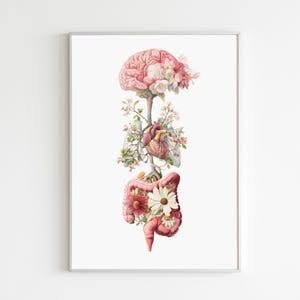
A simple, actionable guide to the connection that changes everything: your mood, your energy, your hormones, and your health ✨
Friend, we need to talk about something that changed the entire way I look at wellness. 💛
For years, we’ve been taught to think of the brain and the gut as two completely separate systems. Your brain does the thinking. Your gut does the digesting.
But that’s not the truth. 🌸
Your gut and your brain are actually in constant conversation. Every single second. They send messages back and forth through what scientists now call the gut-brain axis. And the research on this connection over the last decade has been nothing short of revolutionary.
If you’ve ever felt anxious for no reason, foggy after a bad meal, exhausted despite sleeping, moody around your period, or bloated when you’re stressed, this is not in your head. It’s in your gut. ✨
Let’s break it down. Simply. Warmly. And with tools you can start using today. 💚
💛 A Personal Note
When I was healing from cancer, I quickly learned that nutrition wasn’t just about “eating clean.” It was about healing my gut, which was healing my brain, which was healing my nervous system, which was allowing my body to actually absorb everything I was giving it.
Once I understood this connection, everything shifted. My energy came back. My mood balanced. My sleep deepened. My skin cleared. My hormones started making sense again.
This is one of the most powerful conversations in wellness right now. And I want every woman to understand it. 🌸
🧠 What Is the Gut-Brain Axis? (In Plain English)
Your gut and your brain are connected through three main pathways:
1. The Vagus Nerve 🌿
The vagus nerve is the longest cranial nerve in your body. It runs from your brain, down through your neck, and reaches your entire gut. It’s like a two-lane highway sending signals back and forth constantly.
When your gut is inflamed, the vagus nerve sends distress signals to your brain, contributing to anxiety, brain fog, and low mood. When your gut is calm and healthy, it sends safety signals to your brain that support clarity, focus, and emotional balance.
2. The Microbiome 🦠
Your gut is home to trillions of bacteria that scientists now call your “second genome.” These bacteria are not just passive squatters. They actively:
- Produce over 90% of your body’s serotonin (yes, your “happy chemical”)
- Make dopamine, GABA, and other neurotransmitters
- Regulate inflammation
- Signal your immune system
- Metabolize your hormones (especially estrogen)
- Talk directly to your brain through the vagus nerve
When your microbiome is diverse and balanced, you feel calm, clear, and energized. When it’s out of balance? Anxiety, depression, brain fog, cravings, and inflammation. 🚨
3. The Immune and Endocrine System 🛡️
About 70% of your immune system lives in your gut. Your gut also plays a massive role in hormone metabolism (especially estrogen), inflammation, and even how your body handles stress.
Translation: when your gut is off, EVERYTHING is off. 💛
🚨 Signs Your Gut-Brain Connection Needs Some Love
You might recognize yourself here:
- 🌀 Brain fog and difficulty concentrating
- 😔 Anxiety, low mood, or mood swings
- 💤 Poor sleep, especially waking at 3 AM
- 🍔 Cravings for sugar or carbs
- 😩 Bloating or digestive discomfort
- 🔥 Skin issues (acne, eczema, rosacea)
- 🥱 Chronic fatigue
- 🤒 Getting sick often
- 💇♀️ Hair thinning
- 🌸 Hormonal imbalances (PMS, perimenopause chaos)
- 🍽️ Food sensitivities
If you’re nodding to more than a few of these, your gut-brain axis is asking for support. And the good news? Your body is incredibly responsive when you give it what it needs. ✨
🔬 What The Research Actually Shows
Let me share a few of the studies that get me excited about this space.
A 2024 randomized, placebo-controlled, double-blind crossover trial published in The Journal of Nutrition studied 40 healthy women, ages 18 to 45, giving them a flavonoid-rich blackcurrant beverage for 4 weeks. Compared to placebo, the women showed improvements in working memory, anxiety, tension, and anger. Their gut bacteria (specifically Bifidobacterium) were linked to those improvements. Food literally changed their brains. 🫐
A 2025 randomized controlled trial on a multi-species probiotic in patients with depression showed that daily probiotic supplementation improved vagus nerve function measured through heart rate variability. The probiotics didn’t just help the gut. They calmed the brain through the vagus nerve. 🌿
A double-blind randomized clinical trial on women with obesity showed that just 3 weeks of probiotic supplementation modulated psychological profile, eating behavior, and body composition. The gut had rewired the brain in less than a month. 🤯
And a 2018 landmark review in Frontiers in Neuroscience by Bonaz and colleagues established the vagus nerve as the essential bridge between the microbiome, gut, and brain. This paper is still cited today as the foundation of everything we know about this axis.
The science is clear. When you nourish your gut, you nourish your brain. 💚
🥗 NUTRITION: The Foundation
Here’s where I put on my Nutrition Expert hat. Because food is the #1 most powerful tool you have to shift your gut-brain axis. 🌸
The Foods That HEAL Your Gut-Brain Connection
🫐 Colorful Berries (Polyphenols) Blueberries, blackberries, raspberries, strawberries, pomegranate. Research shows polyphenols feed beneficial gut bacteria AND cross into the brain to reduce inflammation.
🥬 Leafy Greens Spinach, kale, arugula, dandelion, chard. Rich in folate (needed for neurotransmitter production) and fiber (feeds gut bacteria).
🥦 Cruciferous Vegetables Broccoli, cauliflower, brussels sprouts, cabbage. Support gut lining integrity and help with healthy estrogen metabolism.
🌾 Fiber-Rich Foods (Aim for 30+ grams daily) Chia seeds, flax seeds, oats, beans, lentils, artichokes. Fiber = food for your beneficial gut bacteria. Without enough fiber, they starve.
🥒 Fermented Foods Kimchi, sauerkraut, kefir, unsweetened yogurt, miso, tempeh. Live cultures that add beneficial bacteria to your gut.
🐟 Wild Fatty Fish Salmon, sardines, mackerel. Omega-3s reduce brain inflammation and support the gut lining.
🧄 Prebiotic-Rich Foods Garlic, onions, leeks, asparagus, artichokes, unripe bananas. These feed the good bacteria in your gut.
🍵 Green Tea + Bone Broth Green tea’s L-theanine calms the nervous system. Bone broth supports gut lining repair.
🍫 Dark Chocolate (85%+) Polyphenol powerhouse. Yes, it counts.
The Foods That DISRUPT the Gut-Brain
- ❌ Ultra-processed foods (chips, packaged snacks, fast food)
- ❌ Excess sugar (feeds bad bacteria, spikes inflammation)
- ❌ Seed oils (soybean, canola, corn)
- ❌ Artificial sweeteners (disrupt microbiome)
- ❌ Alcohol (damages gut lining, disrupts sleep)
- ❌ Emulsifiers and preservatives
The Simple Rule 🌸
Eat the rainbow, feed the fiber, and add fermented foods daily. That’s the whole game. 💛
🏃♀️ MOVEMENT: The Underrated Gut-Brain Tool
Here’s something most people don’t know. Movement doesn’t just build muscle. It also changes your gut bacteria and stimulates your vagus nerve. Real research shows exercise increases microbial diversity, reduces inflammation, and calms the nervous system.
What Kind of Movement?
💪 Strength Training (2 to 3 times per week) Builds muscle (your metabolic and glucose-regulating organ), supports hormone balance, and stimulates BDNF (a brain-protective protein).
🚶♀️ Walking (Daily, at least 30 minutes) Especially after meals. Aids digestion, calms the nervous system, and stimulates the vagus nerve.
🧘♀️ Yoga or Pilates (2 to 3 times per week) The twisting, breathing, and slow flow massages your digestive organs AND activates parasympathetic mode (rest and digest).
❤️ Zone 2 Cardio (2 to 3 times per week) Light jogging, cycling, or brisk walking where you can still hold a conversation. Great for mitochondria, brain, and gut health.
🌊 Cold Exposure (a few minutes, a few times per week) Cold showers or dips stimulate the vagus nerve, boost mood, and reduce inflammation. Start with 30 seconds. Work up slowly.
Movement Rule 🌸
Move daily, sweat a few times a week, walk after meals, and stretch or breathe every day. ✨
🧪 TESTING: What You Can Ask Your Doctor For
If you want to go deeper, here are some tests that give you real insight into your gut-brain axis:
🧬 Comprehensive Stool Test Looks at your gut bacteria, digestion, inflammation, and parasites. Options: GI-MAP, GI Effects, Zonulin testing. Most functional medicine providers offer these.
🔥 hs-CRP (High-Sensitivity C-Reactive Protein) Measures chronic inflammation. Optimal is under 1.
🌾 Food Sensitivity Testing IgG or IgA panels can identify foods your body may be reacting to. Not perfect, but useful with the right provider.
🦠 SIBO Breath Test If you have chronic bloating, this test can detect small intestinal bacterial overgrowth.
🧬 Vitamin D, B12, Folate, Ferritin All deeply connected to mood, brain function, and gut health.
🩸 Homocysteine Elevated levels can indicate methylation issues that impact brain and gut function.
🔬 Zonulin A marker of gut permeability (“leaky gut”).
💚 Genetic + Epigenetic Testing The DEEPEST test you can do. Understands how YOUR unique body processes nutrients, metabolizes hormones, handles inflammation, and expresses genes based on your lifestyle. This is what I do in my practice, and it’s the most personalized tool available. (More on this at the end.) 🧬
💊 SUPPLEMENTATION: What Actually Helps
Supplements should never replace real food. But they can genuinely support the gut-brain axis when used intentionally. Here are the ones with the strongest research behind them:
🌱 Probiotics
Multi-species probiotics (like the one in the 2025 depression study) can improve vagus nerve function and mood. Look for a diverse blend with at least 10 strains. Rotate every few months.
🌾 Prebiotics
The “food” for your gut bacteria. Options: partially hydrolyzed guar gum, inulin (if tolerated), acacia fiber. Or just eat more prebiotic foods.
🍯 L-Glutamine
An amino acid that supports gut lining repair. Especially helpful for leaky gut.
🐟 Omega-3 (EPA + DHA)
Reduces inflammation in both the gut and the brain. Aim for at least 1 to 2 grams daily. Choose a clean, third-party tested brand.
💛 Magnesium (Glycinate)
Calms the nervous system, supports vagus nerve function, and aids digestion. 300 to 400 mg at night.
☀️ Vitamin D
Not just for bones. Deeply tied to mood, immunity, and gut health. Aim for 60 to 80 ng/mL.
🧠 B Complex (with methylated B12 and folate)
Supports neurotransmitter production and methylation.
🌿 Adaptogens
Ashwagandha, rhodiola, reishi. Support the stress response that impacts your gut.
🌊 Digestive Enzymes + Bitters
Can support digestion, especially in perimenopause when stomach acid production drops.
A gentle reminder: always talk to a qualified provider before starting new supplements, especially if you’re on medications or have any health conditions. 💛
🧘♀️ Doubling Down on the Nervous System
I have to say this. Because if your nervous system isn’t calm, none of this fully works. 🌸
Your vagus nerve is one of the biggest bridges between your gut and your brain. So supporting it directly is a game-changer.
Simple daily practices:
- 🌬️ Cyclic sighing breathwork (5 minutes daily, backed by a 2023 Stanford RCT)
- 🎤 Humming, singing, or chanting (vibrates the vagus nerve through the throat)
- 🧊 Cold water on your face (splash it or use a cold compress at the base of your skull)
- 🌊 Slow, deep belly breathing (6 breaths per minute)
- 🧘♀️ Meditation or prayer
- 🤗 Long, warm hugs
- 🌿 Time in nature
I put together a FREE Vagus Nerve Ebook with all the tools I use daily. Let me know if you want it. 💛
🍽️ A Simple Daily Routine for Your Gut-Brain
Here is what a supportive day looks like:
☀️ Morning
- 🍋 Warm lemon water (supports digestion)
- ☀️ 10 minutes of sunlight (regulates circadian rhythm)
- 🥑 Protein + fiber breakfast (eggs with greens, chia pudding, or a smoothie with berries and flax)
🌤️ Midday
- 🥗 Big salad or bowl with leafy greens, protein, fermented food (kimchi or sauerkraut), and healthy fats
- 🚶♀️ 10 to 20 minute walk after eating
🌙 Evening
- 🍽️ Light, real-food dinner (fish, veggies, complex carbs like sweet potato)
- 🌿 Magnesium and probiotic before bed
- 🧘♀️ 5 minutes of breathwork
- 📱 Screens off an hour before bed
- 😴 Sleep in a cool, dark room, 7 to 9 hours
That’s it. Simple. Repeatable. Life-changing. ✨
🧬 Want to Go Deeper With Me?
If you’ve been trying every gut protocol under the sun and still don’t feel amazing, here’s the truth I’ve learned in my own practice:
Generic protocols don’t work for every woman. Your unique genetic makeup, your epigenetic expression (how your lifestyle is turning your genes on and off right now), and your individual biology all matter.
That’s why I offer Genetic and Epigenetic Testing with a full personalized protocol. Not generic. Not one-size-fits-all. YOUR body. YOUR genes. YOUR blueprint.
You’ll get:
- 🧬 A deep dive into your unique genetic makeup
- ✨ An epigenetic snapshot of how your lifestyle is expressing your genes right now
- 📖 A personalized wellness guide with everything you need (nutrition, supplements, lifestyle, movement)
- 💛 My guidance and support along the way
This is the exact process I used to build my own protocol as a cancer survivor. And it’s the work I now do for other women who want to stop guessing and start understanding themselves at the deepest level. 🌸
👉 Click here to work with me on Genetic or Epigenetic Testing + Protocol
Or send me a DM. I read every message. 📩💛
🌸 A Final Word
Your gut and your brain are one team. When you feed one, you nourish the other. When you neglect one, you weaken both.
The most powerful thing you can do this week? Just start.
Add one fiber-rich food to every meal. Take a walk after dinner. Sip lemon water in the morning. Try 5 minutes of breathwork before bed. Add one fermented food to your day.
These tiny changes compound. Six months from now, your energy, your mood, your skin, your digestion, and your brain will feel completely different. 💛✨
Save this. Share it with your sister, your best friend, your mom. Every woman deserves to understand this. 👯♀️🌸
Progress, not perfection. Always. 💚
Xo,
Clarita Escalante, Wellness Expert & Founder of Claridad
Disclaimer ⚠️
This article is for educational and informational purposes only and is not intended as medical advice. The information shared here is not a substitute for consultation with a licensed healthcare provider. Always consult your physician, functional medicine practitioner, or qualified healthcare provider before starting or stopping any supplement, testing, or protocol, particularly if you are pregnant, breastfeeding, taking medications, or have any underlying health conditions. Genetic and epigenetic testing results should be interpreted with a qualified provider. Individual results vary.